What Does a Business Need for Public EV Charging Installation?
Public EV charging installation requires an electrical assessment, the right charger type, permits, and a properly planned location that meets Canadian standards.
If you’re considering public EV charging installation, you’re not alone. As EV adoption accelerates across Canada, business owners are asking what it takes to add public chargers, how much it costs, and how to plan a smooth installation process. TCA Electric is here to answer your questions.
Below is a complete guide to help your business make an informed decision about public EV charging station installation, from infrastructure requirements to rebates, costs, and long-term ROI.
Why Public EV Charging Is a Smart Business Investment
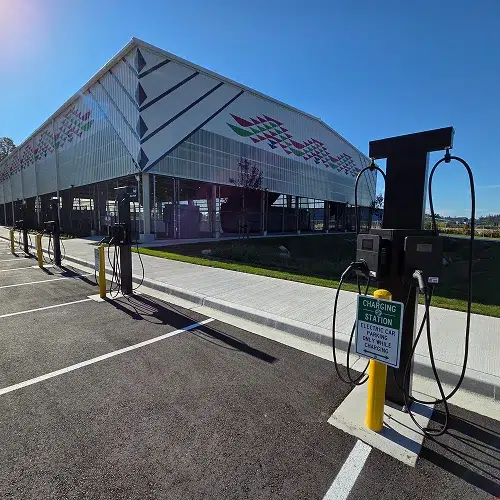
Canada’s EV market is scaling quickly. Public charging ports grew 24% between March 2024 and March 2025, according to Electric Autonomy Canada, and the federal government has set ambitious mandates: 100% zero-emission vehicle sales for light-duty vehicles by 2035 and for MHDVs by 2040, where feasible.
Installing EV charging infrastructure for Vancouver businesses brings several advantages:
- Attract and retain customers by offering convenient, reliable charging.
- Increase dwell time at retail locations, restaurants, and entertainment venues.
- Enhance sustainability branding, supporting corporate ESG goals.
- Future-proof your property as EV adoption continues to rise.
- Gain a competitive edge in commercial real estate and hospitality markets.
Call-Out: Canada needs tens of thousands of new public charging ports by 2030—representing one of the country’s largest infrastructure opportunities.
What “Public EV Charging Installation” Really Means
Definitions & Scope
When planning public EV charging installation, businesses generally choose between two charger types:
- Level 2 Chargers: 240V, ideal for workplaces, commercial parking lots, and destinations with longer dwell times.
- DC Fast Chargers (DCFC): High-power units that deliver rapid charging, ideal for highway corridors or high-traffic commercial sites.
To understand connector types and charging standards like CCS, check out our guide to the Combined Charging System.
Who Is “Public”?
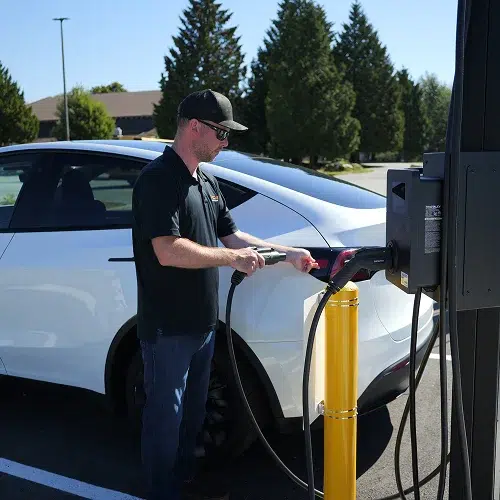
“Public” typically refers to chargers accessible to anyone, not just employees or fleet drivers. Common use-cases include:
- Municipal parking lots and parks
- Retail plazas and malls
- Office buildings and workplaces
- Multi-unit residential buildings
- Hotels and restaurants
- Recreation & tourism sites
Businesses across these sectors can benefit from public EV charging installation by attracting drivers who need reliable access to charging while they shop, work, or travel.
Step-by-Step: How a Business Installs Public EV Charging
Here’s the simplified process, designed to target featured-snippet visibility:
1. Site Assessment & Power Evaluation: A licensed electrician conducts a full assessment of your property, reviewing electrical capacity, panel space, transformer loads, and potential grid constraints. They also identify the most efficient, high-visibility charger locations based on traffic flow, parking patterns, safety, and accessibility requirements.
To see how these assessments apply in real commercial settings, review our Squamish Nation Level 3 EV Charger Installation project profile.
2. Equipment Selection: Your installer helps you determine whether Level 2 or DC Fast chargers are the best fit for your business, factoring in expected dwell times, customer usage, and budget. This step includes selecting connector types, smart-charging software, network capabilities, payment systems, and any load-management features required for your site.
For a deeper look at commercial smart-charging systems and load management, visit our overview of Smart Commercial EV Charging Solutions.
3. Permitting & Utility Coordination: The project team manages all municipal and electrical permits, ensuring your public EV charging installation complies with Canadian standards and building codes. This phase also includes coordinating with the local utility provider to confirm available service capacity, perform load calculations, and determine whether upgrades or new service connections are needed.
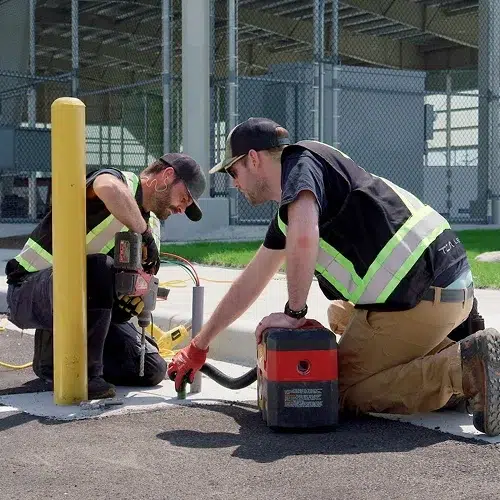
4. Installation & Construction: Professional electricians complete the physical build, including trenching or conduit installation, wiring and panel work, equipment mounting, protective bollards, pavement markings, and signage. Networking hardware is added, and chargers are fully commissioned to ensure safe operation and reliable performance.
5. Activation & Ongoing Maintenance: Once installed, the chargers are activated and connected to your chosen network so drivers can locate and use them. Your installer will set up payment processing, usage reporting, and remote monitoring systems. Ongoing maintenance, such as firmware updates, uptime monitoring, and preventative inspections, keeps your public EV charging station installation running smoothly long-term.
This process applies to both public EV charging station installation and commercial EV charger installation in Canada projects.
Cost Breakdown & Funding Options in Canada for Public EV Chargers
The cost of public EV charging installation varies widely depending on charger type, site conditions, and power availability.
Typical cost components include:
- Charger hardware (Level 2 vs DCFC)
- Civil work: trenching, paving, bollards
- Electrical upgrades
- Networking & payment systems
- Mounting, signage, and commissioning
Public EV Charging Installation Cost (Typical Ranges)
- Level 2 charger: $5,000–$15,000 per port
- DC Fast Charger: $50,000–$200,000 per port
Rebates & Incentives
Businesses may qualify for:
- Federal EV charging installation rebates in Canada
- Provincial funding programs (varies by region)
- Utility-run incentive programs
- Tax deductions for capital equipment
These incentives significantly reduce public EV charging installation costs, particularly for DC fast charging projects.
ROI Considerations
- Revenue from paid charging sessions
- Increased foot traffic and dwell time
- Higher property value and leasing appeal
- ESG benefits & regulatory compliance
Key Public EV Challenges & How to Overcome Them
Even well-planned public EV charging installation projects encounter obstacles. Key challenges include:
Grid Capacity & Power Availability
Limited power supply may require transformer upgrades. (Pembina Institute notes grid readiness as a major barrier.)
Standardization & Interoperability
Choose chargers with open standards (OCPP, CCS, NACS) to avoid vendor lock-in.
User Access & Business Model
Decide whether charging is free, metered, tiered, subscription-based, or connected to loyalty programs.
Maintenance & Uptime
Reliable equipment, remote monitoring, and scheduled servicing are essential for public charging reliability.
Why Choose TCA Electric for Your Public EV Charging Project
TCA Electric provides fully managed support for public EV charging installation, including commercial assessments, permitting, installation, and long-term service.
- Licensed, experienced electricians specializing in EV infrastructure
- Extensive commercial project portfolio
- Knowledge of Canadian codes, incentives, and utility requirements
- Transparent pricing and fast turnaround
Whether upgrading a small lot or developing a multi-charger commercial hub, TCA Electric can guide you from planning through activation.
To learn more or schedule a free consultation or site assessment, contact us today.
FAQs About Public EV Charging Installation
How long does installation take?
Most projects take 2–8 weeks, depending on permitting, equipment lead times, and electrical upgrades.
What are the differences between Level 2 and fast chargers?
Level 2 chargers provide moderate charging suitable for workplaces and destinations. DC Fast charges vehicles in minutes and supports high-turnover sites like retail or travel corridors.
Can I retrofit an existing parking lot?
Yes, most lots can be retrofitted for public EV charging station installation, though trenching and electrical work will influence cost.
What maintenance is required for public EV chargers?
Routine inspections, cleaning, firmware updates, and functionality testing ensure uptime and user satisfaction.
Are there ongoing costs after installation?
Yes, electricity, networking fees, payment processing, and periodic maintenance are typical operating expenses.