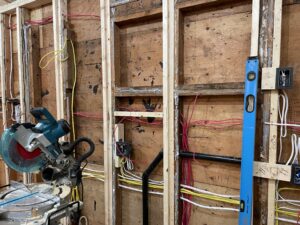
How Much Does an Electrical Panel Replacement Cost in Vancouver, BC?
An electrical panel replacement without changes to a home’s utility service typically falls between $3,500 and $6,000 in Vancouver, depending on the home’s electrical system, panel type, panel access, and other factors. This is distinct from a service upgrade, however, which costs significantly more.
Planning for an Electrical Panel Replacement
Replacing an electrical panel is a significant project that can become necessary as electrical equipment ages or a family’s electrical demands change. An outdated or undersized panel may no longer provide the space or functionality a modern home requires, and a damaged panel should always be replaced immediately.
For homeowners considering this work, understanding the cost of an electrical panel replacement is essential before planning the project. TCA Electric helps homeowners throughout Vancouver and the surrounding metro area assess their electrical systems and determine the right scope of work.
In this guide, we’ll explain what affects the cost of replacing an electrical panel, what the process includes, and when a panel replacement may also call for a service upgrade.
An Overview of Electrical Panel Replacement Cost
Replacing an electrical panel in Vancouver typically costs $3,500–$6,000 when the work does not require changes to the property’s utility service, but that range should be taken as a planning figure rather than a fixed price. The final cost depends on the panel, the number and condition of circuits, accessibility, code requirements, and the condition of the existing electrical equipment.
For reference, some of our recent residential panel replacement projects here at TCA Electric have cost $3,601 and $4,982 in North Vancouver. Service upgrades are larger cost considerably more, often between $10,000 and $16,000. You can learn more about the cost of a service upgrade here.

Electrical Panel Replacement vs. Electrical Service Upgrade
At TCA Electric, we find that homeowners may conflate the terms panel replacement, breaker box replacement, and service upgrade. However, while a panel replacement and breaker box replacement are generally different words for the same thing, a service upgrade describes a different scope of electrical work entirely.
Your electrical panel (sometimes called a breaker box, breaker panel, or fuse box) encloses the breakers inside your property. Your electrical service includes the conductors, meter equipment, main disconnect, utility connection and related equipment supplying electricity to the property.
That means you can sometimes replace an electrical panel while retaining the home’s existing service capacity. For example, a homeowner with an older or damaged panel may need a modern replacement panel even though the existing service is still adequate for the home’s electrical demand.
A service upgrade is different. If a load calculation shows that the home needs more capacity, the project may require changes to the service equipment and utility connection in addition to replacing the panel.
This distinction commonly comes up when homeowners are:
- Adding an electric vehicle charger
- Installing a heat pump
- Completing a major renovation
- Adding a secondary suite
- Installing a hot tub
- Adding battery backup
- Planning several major electrical loads at once
A new panel may provide additional breaker space without increasing service capacity. In other situations, the existing service may not have enough capacity to support the home’s current or planned demand, making a service upgrade more appropriate.
Cost Factors for an Electrical Panel Replacement
With this distinction clarified, let’s focus on the factors that impact the cost to install a new electrical panel.
Panel and Breaker Configuration
The size and configuration of the replacement panel, along with the number of circuits that need to be accommodated, affect the amount of equipment and installation work required. Homes with many circuits may require a larger or more complex panel arrangement.
The condition and compatibility of the existing breakers also matter. Some breakers may be reusable, while others need to be replaced as part of the project.
Condition of the Existing Installation
A straightforward replacement is easier when the existing wiring and equipment are accessible and in suitable condition. Problems discovered during the work can add scope, particularly if circuits need to be extended, rearranged or corrected.
Accessibility
The panel needs adequate working space for safe installation and future maintenance. If the existing panel is difficult to access or does not meet current working-clearance requirements, additional work may be necessary.
Service Equipment
A panel replacement can reveal that other components of the electrical service also need attention. Meter equipment, the main disconnect, service conductors, or related equipment may need to be assessed, particularly in older homes.
If those components need to be modified because the property is also increasing its service capacity, the project becomes a service upgrade rather than a panel-only replacement.
Additional Electrical Loads
Planned additions can change the scope considerably. Heat pumps, electric vehicle chargers, suites, hot tubs, and battery systems can all increase electrical demand.
In some cases, the existing service has enough capacity to accommodate the new equipment. In others, a load calculation shows that a larger service is required. Load management may also provide another way to accommodate certain new loads without increasing service size.
Building and Site Conditions
Older homes can present additional considerations, including hazardous materials, unusual wiring configurations, limited access, and other conditions that are difficult to identify from the panel alone. Larger or more complicated projects may also involve engineering or additional municipal requirements.
What Does an Electrical Panel Replacement Entail?
Your electrical panel is the central distribution point for electrical circuits throughout your home. It contains the breakers that protect individual circuits and allows electrical power to be distributed to lighting, receptacles, appliances and other equipment.
An electrical panel replacement involves exactly what you’d expect: your home’s existing panel is removed, then a new panel is installed and connected to the home’s electrical circuits. However, as part of this process, additional work will be needed, such as:
- Assessing the existing panel, breakers and electrical service
- Selecting a compatible replacement panel and breakers
- Removing the existing panel
- Installing the new panel and associated equipment
- Reconnecting the home’s circuits
- Addressing wiring or equipment issues identified during the work
- Completing required permitting and inspection
- Coordinating the planned shutdown and restoration of electrical service
The project may also involve replacing individual breakers, correcting circuit issues, improving circuit labeling, or making other changes needed to bring the installation into compliance with current requirements.
When Should You Replace an Electrical Panel?
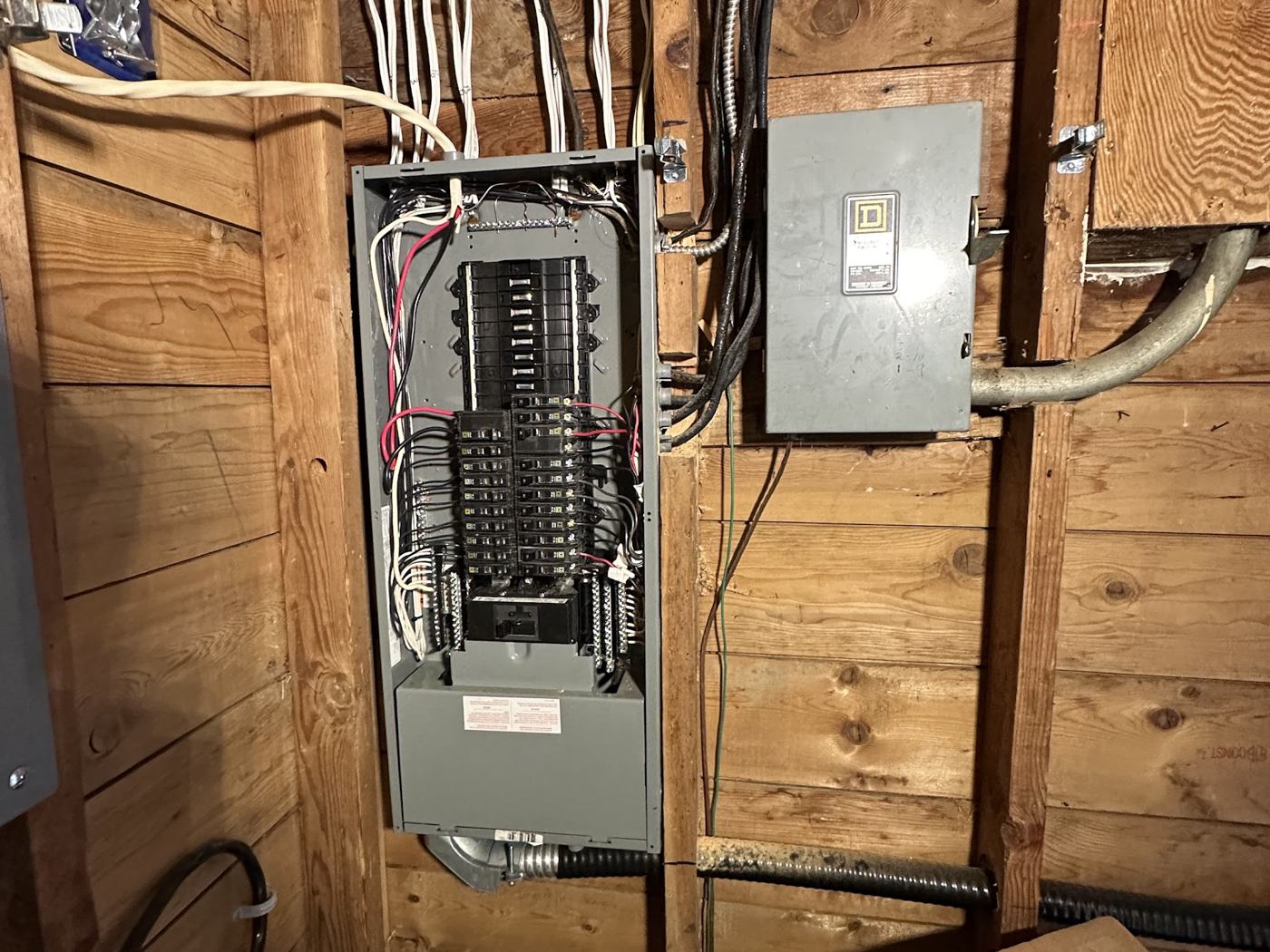
Panel replacement can arise from several different situations, and the appropriate scope depends on what is happening with the home’s electrical system. Here are some common situations where an electrical panel replacement may be warranted.
The Panel Is Damaged or Problematic
Physical deterioration, overheating, or constantly tripping breakers should all be taken very seriously as strong signs that an electrical panel should be inspected and potentially replaced.
The Panel Is Outdated
An older panel may have deteriorated components, limited breaker space or a configuration that no longer suits the property. Replacing it can provide a more suitable foundation for the home’s current electrical needs.
Further, some older panels are known to be unsafe and are thus uninsurable. These should be replaced immediately as a result.
You Want to Add Electrical Circuits
A renovation may require additional circuits or changes to the home’s electrical distribution. If the existing panel cannot accommodate the work, replacement may be part of the renovation.
You’re Adding an EV Charger, Heat Pump, or Other Upgrade
A homeowner planning electrification may need additional breaker space or a panel capable of accommodating new equipment. The existing service should also be evaluated to determine whether it can support the additional load.
You Already Need a Service Upgrade
Some homes need both. For example, a property may have an aging panel while also requiring additional electrical capacity for several major loads. In that case, replacing the panel can be one component of a broader service-upgrade project.
The important question is what your existing electrical system can safely and practically support. Our team at TCA Electric is available to assess your panel and related equipment before determining whether a replacement is appropriate.
Do You Need a New Panel or Just a New Breaker?
A problem with one breaker does not necessarily mean the entire electrical panel needs to be replaced. Breakers can sometimes be replaced individually when the panel itself remains in suitable condition and the replacement breaker is compatible with the equipment. This can be an appropriate solution when a breaker has failed or a specific circuit requires attention.
A qualified electrician should assess your electrical panel before deciding between the two options. Replacing a breaker may resolve a localized problem, while replacing the entire panel addresses the condition and configuration of the distribution equipment itself.
When Does a Panel Replacement Also Require a Service Upgrade?
A panel replacement and a service upgrade from 100 to 200 amps can be completed as part of the same project, but one does not always require the other. If the existing service can support the home’s electrical demand and the project only requires replacement of the panel, the service may remain at 100 amps.
However, a service upgrade should be considered if a load calculation shows that the existing service does not have sufficient capacity for the home’s current or planned electrical needs. This can happen during major renovations or when homeowners are adding equipment such as:
- EV charger
- Heat pump
- Electric heating
- A secondary suite
- Hot tubs
- Battery storage
- Other substantial electrical loads
The right approach is to assess the home’s electrical demand before assuming that a larger service is necessary. In some situations, approved load-management equipment can accommodate a new major load without increasing the service size.
What Permits Are Required for Panel Replacement?
In Vancouver, an electrical permit is required to complete an electrical panel replacement.
TCA Electric handles all electrical requirements for panel replacements, which includes obtaining the electrical permit as well as coordinating installation and inspections. Depending on the jurisdiction, the municipality or Technical Safety BC is responsible for administering the electrical permit and inspection process.
For a straightforward panel replacement that does not involve changes to the utility service, BC Hydro may have little direct involvement. If the project also requires a service upgrade or changes to the utility connection, BC Hydro becomes part of the process.
That distinction is another reason to establish the project scope before work begins. A panel-only replacement can be considerably more straightforward than changing the property’s electrical service.
How Long Does an Electrical Panel Replacement Take?
The actual replacement of the panel itself can often be completed within a day. However, the overall project timeline depends on the scope and permitting requirements.
A straightforward replacement generally involves an initial assessment and proposal, permitting, scheduling, the installation itself, and inspection. More complicated projects can take longer if additional electrical work is required or if the service also needs to be upgraded.
For a panel-only replacement, our team at TCA Electric can determine the expected installation timeline after assessing your existing equipment and project requirements.
Electrical Panel Replacement FAQs
How much does an electrical panel replacement cost in Vancouver?
A typical residential panel replacement without utility service changes has a planning range of $3,500–$6,000. Actual costs depend on the panel configuration, number of circuits, accessibility, condition of the existing electrical system and any additional work required.
Do I need to upgrade both my electrical panel and service?
Not always. A panel can sometimes be replaced while retaining the existing service capacity. When increasing service capacity, all related equipment must be assessed for compatibility.
Who coordinates the work with BC Hydro?
TCA Electric prepares and submits the electrical connection request, provides technical information, and coordinates the electrical work with BC Hydro when the project requires utility involvement. A panel-only replacement that does not change the utility service typically does not require the same level of BC Hydro coordination as a service upgrade.
Will my power be turned off?
Yes, a planned outage is normally required while the service is disconnected and the new equipment is installed. TCA Electric coordinates the shutdown, inspection, and reconnection process.
Can I replace just one breaker instead of the whole panel?
Sometimes. If the panel remains in suitable condition and the breaker is compatible with the equipment, an individual breaker may be replaced without replacing the entire panel. An electrician should assess the equipment before determining the appropriate repair.
Does installing a new panel increase my home’s electrical capacity?
Not necessarily. A new panel can improve the condition, configuration, or available breaker space of your home’s electrical distribution system while retaining existing service capacity, but increasing available capacity requires a service upgrade.
Schedule an Electrical Panel Inspection with TCA Electric
If your electrical panel is aging, damaged, overcrowded, or no longer suited to your home’s needs, the first step is scheduling an inspection to determine exactly what’s best for your home.
The licensed and experienced electrical professionals at TCA Electric are available to assess your existing panel and electrical service, identify the appropriate scope of work, and explain whether you need a panel replacement or another solution.
For homeowners in Vancouver and the surrounding metro area, our initial assessment provides a clear basis for planning your electrical project before work begins. Contact us to book an inspection today!